
How Much Does a Paver Patio Cost in Massachusetts? (2026 Guide)
· By Josué Santos
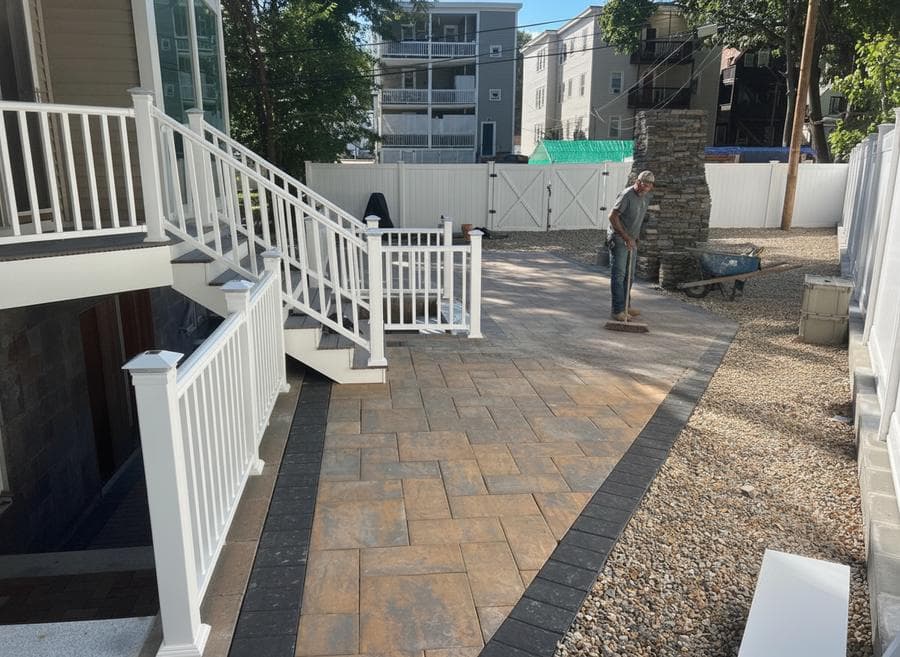
A paver patio is one of the most popular ways to add usable outdoor living space to a New England home, and it is also one of the most misunderstood when it comes to price. Homeowners often hear a per square foot number online, multiply it by their yard, and assume they have a budget. The reality is that two patios of the same size can land at very different totals once you account for the paver you choose, the ground you are building on, and the features you want built in.
This guide walks through what actually drives paver patio cost in Massachusetts in 2026, with a focus on the things that matter most in our climate: a deep, properly compacted base, real drainage, and materials that hold up to freeze and thaw. Prices here are market ranges, not a quote, because the only way to get a number tied to your yard is to have someone see it. For that, a free in-home estimate is always the reliable path.
Size and layout set the starting point
The first number that moves your budget is simply how much patio you are building. Most paver patios are priced with square footage in mind, so a small landing off a back door costs far less than a sprawling entertaining space with multiple seating areas. As a rough guide, larger patios often carry a lower cost per square foot because the crew is already mobilized and the base work runs in one continuous pass, but the total still climbs with size.
Shape matters as much as area. A simple rectangle is efficient to lay, while curves, rounded corners, and intricate patterns require more cutting, more waste, and more labor. A herringbone or basket-weave pattern with a contrasting border looks great, but it takes longer to install than a straight running bond, and that time shows up in the price.
It also helps to think about how the patio connects to the rest of the yard. Building it flush with an existing walkway, driveway, or door threshold can add steps or transitions, and each of those pieces adds a bit to the scope. Naming what you actually want to use the space for, dining, lounging, a grill station, keeps the layout, and the budget, focused.
Paver material and grade
The paver you pick is one of the biggest levers on the final number. Standard concrete pavers sit at the more affordable end and come in a wide range of colors and shapes. Premium concrete pavers with textured, tumbled, or color-blended finishes cost more but read as higher end. Natural stone such as bluestone or granite sits at the top, both in price and in look, and clay brick lands in its own range depending on style.
Thickness and rating matter too, especially here. In Massachusetts you want a paver rated for our freeze and thaw cycles, because water that seeps into a low-grade unit can crack it when it freezes and expands. A quality paver with the right density and a good sealer holds its color and shape for decades, which is why the cheapest unit on the shelf is not always the best value over the life of the patio.
A helpful way to think about it: the paver is the part you see and touch every day, so it is often worth spending here while saving elsewhere. A good contractor will show you options across price points and explain the trade-offs in durability and appearance rather than defaulting to the most expensive choice.
Base prep, excavation, and why depth is everything
This is the part homeowners rarely see and the part that separates a patio that lasts from one that heaves and sinks within a few winters. Under every quality paver patio is a compacted base of crushed gravel topped with a bedding layer, and in New England that base needs real depth. Many installers build a base of roughly eight to twelve inches of compacted gravel, sometimes more for patios that carry heavy use or sit on poor soil.
Depth matters because of frost. Our ground freezes and thaws repeatedly through the winter, and moisture trapped under a thin or poorly compacted base will push the pavers up unevenly, a problem called frost heave. A deep, well-compacted, well-draining base gives that moisture somewhere to go and keeps the surface flat and level for years. This is exactly why a bargain quote with a shallow base tends to fail: you are paying for what you cannot see.
Excavation cost tracks with how much material has to come out and where it goes. Digging out eight to twelve inches across a large patio produces a lot of soil that has to be hauled away, and rocky or clay-heavy ground, common in parts of Massachusetts, is slower to dig. Any old slab, roots, or debris that has to be removed first adds to the prep as well.
Site access, grading, and drainage
How easy it is to reach the work area has a real effect on labor. A backyard that a skid steer can drive straight into moves fast. A patio behind a fence, up a slope, or reachable only through a narrow side yard often means moving base material and pavers by wheelbarrow, and that hand labor adds hours. The harder the access, the more the install costs, even for the same finished patio.
Grading is the next factor. A flat, even yard is the ideal starting point. If the ground slopes, or if the patio needs to step down from a door, the crew has to build up, cut in, or add steps and small retaining elements to create a level, safe surface. That extra shaping is skilled work and it adds to the scope.
Drainage ties both together, and in our climate it is not optional. A patio has to be pitched slightly away from the house so water runs off instead of pooling or draining toward your foundation. On tighter or wetter lots you may also need a drain, a dry well, or a permeable paver system to manage runoff. Getting this right protects both the patio and the house, and it is one more reason an in-person look beats a phone quote.
Add-ons: fire pits, walls, steps, and lighting
Features are where a patio budget can grow quickly, and where the space becomes something you actually want to spend evenings in. A built-in fire pit is one of the most requested add-ons and typically adds a set amount depending on size and stone. Seat walls and retaining walls, which double as extra seating and definition for the space, are priced by length and height, so a long wall is a meaningful line item on its own.
Steps and multi-level designs add both material and labor, since each level needs its own base and edge work. Pergolas, outdoor kitchens, and stone veneer on walls push the total higher still. None of these are required for a solid patio, but they are the pieces that turn a simple surface into an outdoor room, so it is worth deciding early which ones matter to you.
Low-voltage lighting is a smaller add that delivers a lot. Lights set into steps, walls, or the patio edge make the space safe and usable after dark and give it a finished look. Because the wiring goes in during the build, adding it later is more disruptive, so it is smart to price it in up front even if you are undecided.
Permits and getting an accurate estimate for your yard
Whether a paver patio needs a permit depends on your town and the details of the project. A simple ground-level patio often does not, but adding retaining walls above a certain height, changing drainage, or building close to a property line or wetland can trigger local requirements, and towns across Massachusetts set their own rules. Rather than a fixed figure, treat permitting as a normal item your contractor should check and handle as part of planning the job.
Because so much of the price depends on things only visible on site, the ground conditions, access, grading, and drainage, a firm number given over the phone is usually a guess. The reliable way to budget is to have a contractor walk the yard, take measurements, and understand how you want to use the space. That visit turns a rough range into a plan built around your actual property.
As a family owned company that has served the South Shore for nine years, Jr Santos Construction Corp builds patios and decks alongside general contracting, remodeling, and additions. When you book a free in-home estimate, you get a clear, itemized picture of your patio, base and all, so the number you plan around is the number you can rely on.
Frequently asked questions
- What has the biggest effect on paver patio cost?
- Size, the paver grade you choose, and the base prep move the budget the most. In Massachusetts the hidden cost is the base: a deep, properly compacted, well-draining base is what keeps the patio flat through freeze and thaw, so a bargain quote often means a shallow base that fails.
- How deep does the base need to be for a paver patio in New England?
- Most quality installs use roughly eight to twelve inches of compacted crushed gravel under the bedding layer, sometimes more on poor soil or for heavy use. That depth handles frost heave from our repeated freeze and thaw cycles and keeps the surface level for years.
- Will a paver patio crack or heave in the Massachusetts winter?
- A properly built one should not. The keys are a paver rated for freeze and thaw, a deep compacted base, and correct drainage so water is not trapped underneath. Patios that heave or sink almost always come from a base that was too shallow or poorly compacted.
- Do I need a permit for a paver patio in Massachusetts?
- It depends on the town and the project. A simple ground-level patio often does not, but retaining walls above a certain height, drainage changes, or work near a property line or wetland can trigger local rules. A good contractor checks your town requirements and handles any permitting as part of planning.
- How do I get an accurate price for my paver patio?
- Book a free in-home estimate through the site or by phone. Because cost depends on your ground conditions, access, grading, and drainage, seeing the yard in person is the only way to give a real number, so the figure you plan around reflects your actual property.
Serving
Found this helpful? Make us a preferred source on Google.
Ready for an exact price?
Get a free, no-pressure in-home estimate. Real numbers for your home, not a phone guess.