
How Much Does It Cost to Build a Deck in Massachusetts? (2026)
· By Josué Santos
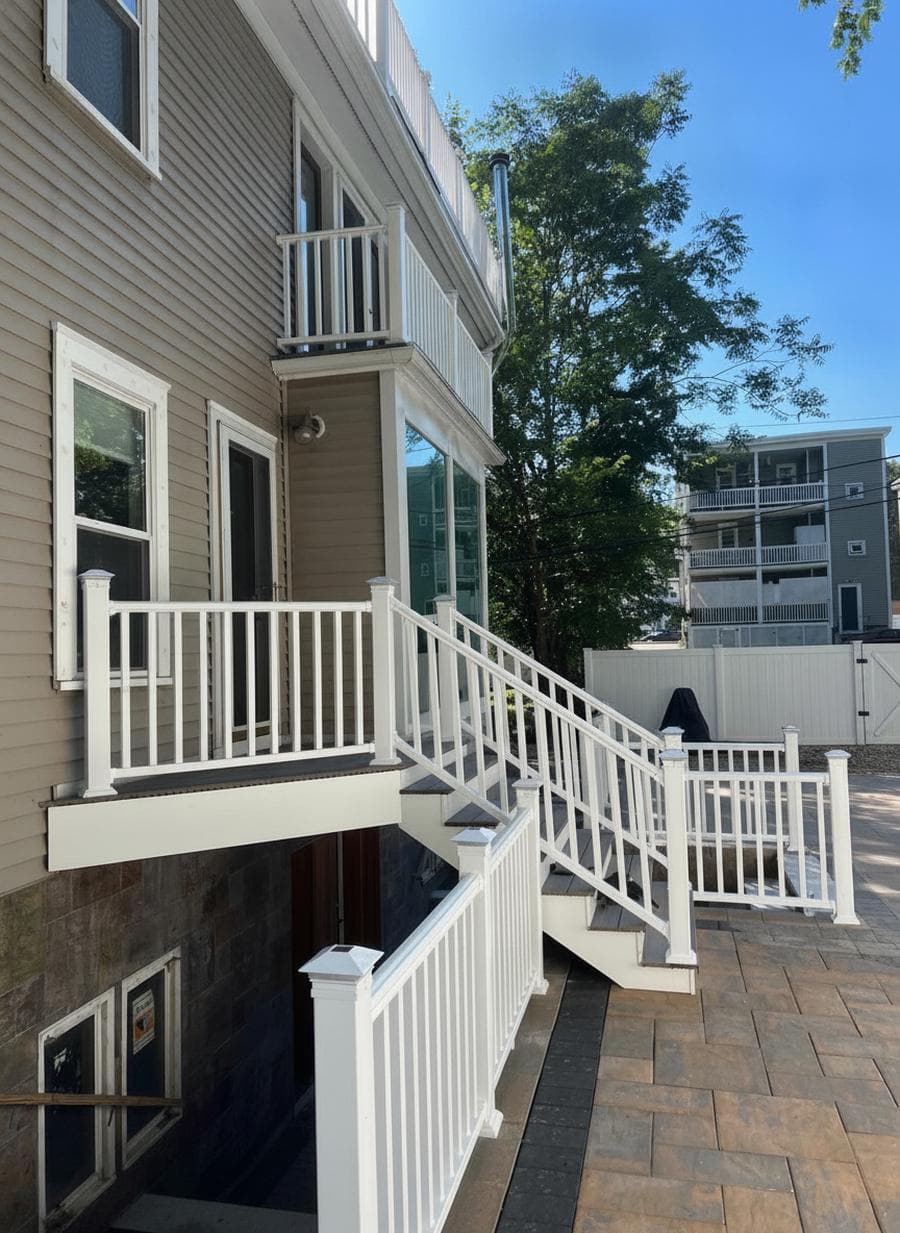
A new deck is one of the most rewarding projects a Massachusetts homeowner can take on, and one of the hardest to price without a plan. Two decks with the same footprint can land at very different numbers once you factor in the decking material, how high the deck sits off the ground, the railing style, and what the crew finds when they start digging the footings. That is why a quick number over the phone rarely holds up.
This guide walks through what actually drives deck cost in New England, from pressure-treated versus composite boards to stairs, footings, permits, and the way our freeze-thaw winters shape the build. It also covers the maintenance and long-term value side, so you can weigh the upfront price against what the deck costs you over the years. For a figure tied to your yard and your house, the reliable path is always a free in-home estimate.
Decking material: pressure-treated, composite, or hardwood
The board you walk on is the single biggest driver of deck cost, and it is also the choice you live with the longest. Pressure-treated pine is the most affordable and the most common material in Massachusetts. It holds up well against rot and insects, it is easy for any crew to work with, and it keeps the upfront budget down. The trade-off is upkeep: it needs cleaning and re-sealing every couple of years to stay looking good and to fight the graying and cracking our climate brings.
Composite decking, made from wood fibers and recycled plastic, sits in the middle to upper range on price but earns it back in low maintenance. It does not rot, splinter, or need staining, and modern boards resist fading far better than early versions did. For a busy household that does not want to spend weekends sealing boards, composite is often the better value over the life of the deck, even though it costs more on day one.
Hardwoods like ipe or mahogany are the premium tier. They are dense, beautiful, and extremely durable, but they cost the most, take longer to install because of how hard the wood is, and still want periodic oiling to keep their color. Most homeowners choose between pressure-treated and composite, and a good contractor will lay out the price and upkeep of each so you can match the material to how you plan to use the deck.
Size and height change the number more than you expect
Square footage is the obvious factor: a larger deck needs more boards, more framing, and more labor, so the budget grows with the footprint. But the shape matters too. A simple rectangle is the most efficient to build, while angled corners, multiple levels, curves, or built-in features like benches and planters all add framing complexity and labor time.
Height is the factor homeowners tend to underestimate. A low deck a step or two off the ground is straightforward. A deck raised a full story to reach a second-floor door, common on sloped South Shore lots and on homes with walkout basements, needs taller support posts, more substantial framing, a longer staircase, and often more robust footings. The same square footage sitting high off the ground can cost noticeably more than a ground-level version simply because of what it takes to support it safely.
Railings, stairs, and footings
Railings are more than a finishing touch in Massachusetts, they are a code requirement on any deck above a set height, and the style you pick moves the budget. Pressure-treated wood railing is the most economical. Composite railing matches low-maintenance decking and costs more. Aluminum or cable and glass systems give an open, modern look and sit at the top of the range. Because railing runs the full perimeter, the choice adds up quickly on a larger deck.
Stairs add cost per run, and the taller the deck, the longer and more involved the staircase. A single short set of steps is minor, but a full staircase down from a raised deck, sometimes with a landing, is real framing work. Any spot where the deck meets grade or turns a corner adds labor.
Footings are the part no one sees and no one should skimp on. In New England, footings have to reach below the frost line, which in most of Massachusetts means digging roughly four feet down so winter frost heave cannot lift and crack the structure. The number of footings, the soil conditions, and whether the crew hits ledge or rock all affect the cost. Proper footings are what keep a deck level and safe for decades, so this is never the place to cut corners.
Site conditions and access
What is around and under the deck can move the price as much as the deck itself. A flat, open backyard with easy access is the best case. A sloped lot, common across the South Shore, means taller posts and more framing to keep the surface level. Rocky soil or buried ledge can turn footing work into a longer job, and no one can fully price that until digging begins.
Access matters for labor too. If a crew has to carry materials a long way around the house, work in a tight side yard, or protect existing landscaping and patios, that adds time. Tie-ins to the house also factor in: attaching a ledger board correctly, flashing it so water cannot get behind the siding, and making sure the connection is sound is critical work in our wet, freeze-thaw climate, where a poorly flashed ledger is a leading cause of deck failure.
Removing an old deck before building the new one is another common line item. Demolition and haul-away take time, and once the old structure is gone, the crew can sometimes find rot or framing issues at the house that should be addressed before the new deck ties in.
Permits and inspections in Massachusetts
Nearly every new deck in Massachusetts requires a building permit, and the local building department will inspect the work, typically the footings before they are backfilled and the finished structure before you use it. Requirements and fees vary from town to town, so what applies in Bridgewater may differ slightly in Marshfield or the next town over. Treat permitting as a normal, expected part of the project rather than an optional extra.
Permits exist for good reason: they confirm the footings, framing, ledger connection, and railing all meet code, which protects your safety and your home. They also matter down the road. An unpermitted deck can create problems when you sell, and insurers may push back on a structure that was never inspected. A reputable contractor pulls the permit, schedules the inspections, and builds to code as a standard part of the job, and explains any fees up front in the estimate rather than leaving them to you.
Maintenance and long-term value
The sticker price is only half the story. A pressure-treated deck costs less to build but asks for regular cleaning and re-sealing to survive New England winters looking good, so factor that time and material into your long-term budget. A composite deck costs more upfront but mostly just needs an occasional wash, which is why many homeowners who plan to stay in their home choose it despite the higher starting price.
A well-built deck also earns its keep. Outdoor living space is one of the improvements buyers notice, and a solid, code-compliant deck adds usable square footage and curb appeal that a home without one lacks. Quality construction, proper footings, and good flashing are what protect that value: a deck that stays level, safe, and watertight for decades is worth far more than one built fast and cheap that needs repairs in a few years.
The smart way to think about deck cost is total cost over time, not just the build. When you weigh material, maintenance, and how long the deck will last, the cheapest option upfront is not always the least expensive in the end.
Frequently asked questions
- What has the biggest effect on deck cost in Massachusetts?
- The decking material and the size of the deck move the budget the most, followed by height off the ground, railing style, and footings. Pressure-treated pine keeps the upfront cost low, while composite and hardwood cost more but ask for less maintenance over the years.
- Do I need a permit to build a deck in Massachusetts?
- In almost all cases, yes. A new deck requires a building permit and inspections, and the exact requirements and fees vary by town. A good contractor pulls the permit, schedules the inspections, and builds to code as part of the job.
- How deep do deck footings need to go in New England?
- Footings have to reach below the frost line so winter frost heave cannot lift the structure, which in most of Massachusetts means digging roughly four feet down. The exact depth, the number of footings, and the soil conditions all affect the cost and the labor involved.
- Is composite decking worth the extra cost over pressure-treated?
- It depends on how long you plan to keep the deck and how much upkeep you want. Composite costs more to build but skips the regular staining and sealing that pressure-treated needs to survive our winters, so it often wins on total cost over time for homeowners staying put.
- How do I get an accurate price for my deck?
- Book a free in-home estimate. Seeing your yard in person is the only way to account for the slope, soil, deck height, access, and how the deck ties into your house, so the figure you plan around reflects your actual property instead of a rough range.
Found this helpful? Make us a preferred source on Google.
Ready for an exact price?
Get a free, no-pressure in-home estimate. Real numbers for your home, not a phone guess.